


Table of Contents
Table of Contents
Google Search is changing how people discover businesses, compare services, and make purchasing decisions. Instead of browsing multiple websites to gather information, users can now ask complex questions and receive AI-generated responses supported by relevant web sources.
For businesses that depend on organic traffic, this creates an important challenge: how do you make sure your website remains discoverable when Google answers questions directly?
That is where Google AI Mode SEO becomes important.
Traditional search engine optimization still matters, but businesses must also consider how their content answers detailed questions, demonstrates expertise, and provides information worth referencing.
Google has introduced significant changes to its AI search experiences throughout 2026, including improved source visibility and dedicated performance reporting.
Understanding these developments can help businesses strengthen their existing SEO strategies while preparing for the growing role of AI-powered search.
Quick Overview
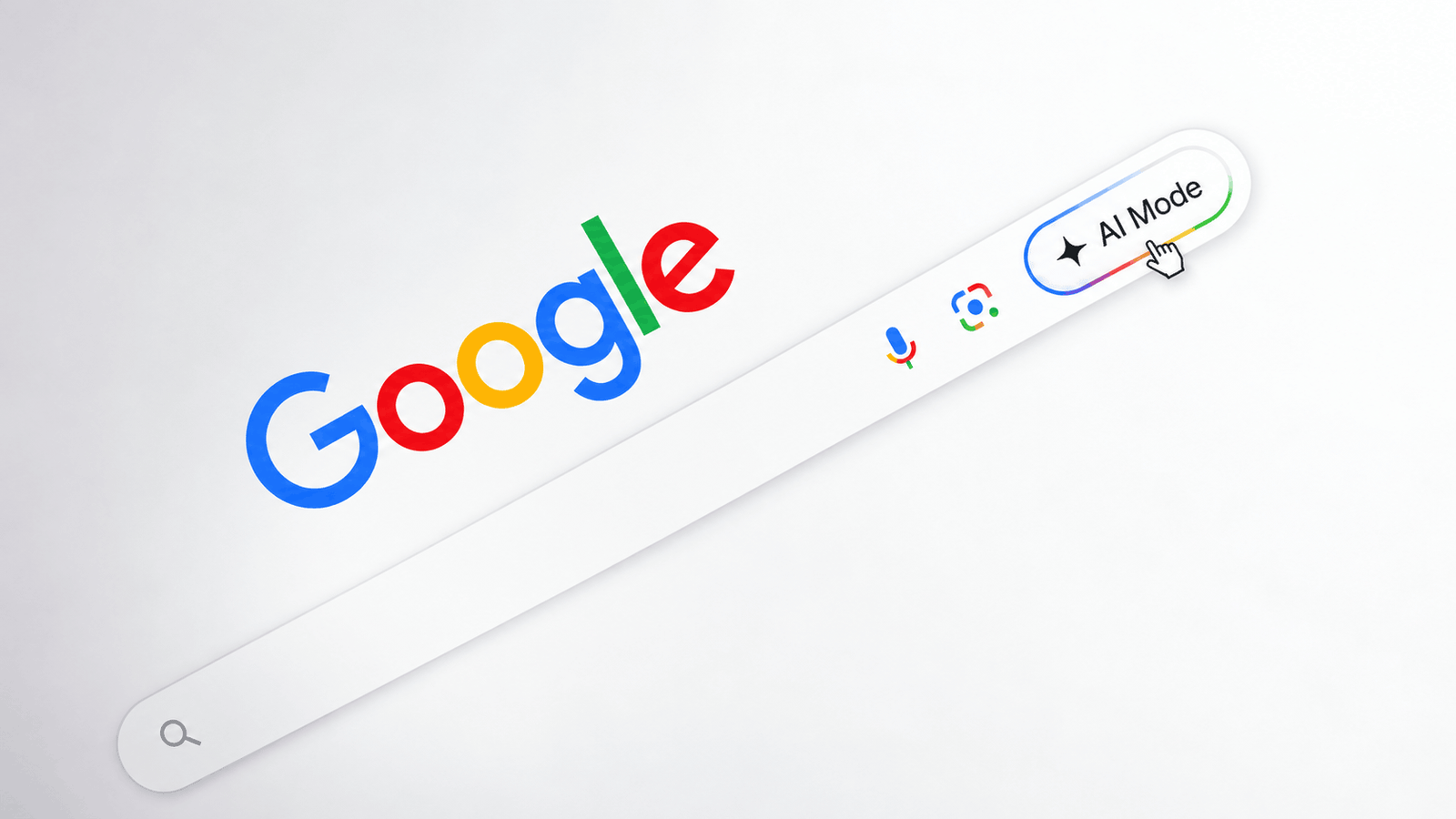
Google AI Mode SEO is the process of optimizing your website to improve its visibility in Google’s AI-powered search experiences, particularly AI Mode and AI Overviews.
Google uses its existing search systems, along with techniques such as retrieval-augmented generation and query fan-out, to find relevant information and support AI-generated answers with website links.
To improve your opportunities for visibility:
- Ensure important pages are indexed, crawlable, and eligible to appear in Google Search.
- Publish original content that addresses real customer problems.
- Organize information using clear headings, useful explanations, and supporting evidence.
- Strengthen your website’s technical SEO and internal linking.
- Maintain accurate business, product, and service information.
- Monitor AI search impressions through Google Search Console.
Google does not require a separate AI SEO certification, special schema, or dedicated AI optimization file.
The objective is to make your website a useful, trustworthy source that Google’s search systems can discover and understand.
What Is Google AI Mode SEO?
Google AI Mode SEO refers to applying search optimization principles to improve how websites are discovered and represented within Google’s AI-generated search responses.
In traditional search, users often enter short keyword phrases, review ranked results, and visit several pages.
AI Mode supports more detailed questions, comparisons, follow-up queries, and research-oriented conversations.
For example, a business owner might search:
“Which CRM is best for a small real estate company that needs automated follow-ups, appointment scheduling, and SMS marketing?”
Rather than presenting only a list of CRM providers, AI Mode can help explain suitable options, compare capabilities, and link to relevant websites.
This creates opportunities for software companies, agencies, service providers, and publishers whose content provides useful answers to specific questions.
Google AI Mode vs. AI Overviews
Although these experiences share some underlying search technologies, they are not identical.
Google AI Overviews provide AI-generated summaries within the broader Google Search experience when Google’s systems determine that an overview would be helpful.
Google AI Mode is a more conversational search experience designed for deeper research, complicated comparisons, and follow-up questions.
Both can display supporting links to websites. However, the responses and sources may differ because Google can use different models and techniques.
Google AI Mode SEO therefore focuses on strengthening website visibility across these experiences rather than optimizing for one fixed response format.
According to Google’s official AI features documentation, the foundational requirements for appearing in AI search remain closely connected to traditional SEO.
What’s New in Google AI Search in 2026?
Google’s 2026 developments make AI search increasingly important for businesses that want to maintain organic visibility.
Three changes deserve particular attention.
1. Google Published Dedicated AI Search Optimization Guidance
On May 15, 2026, Google introduced official guidance explaining how website owners can improve their presence in generative AI search.
The recommendations prioritize original information, useful content, technical accessibility, and established SEO practices.
Google also addressed misconceptions surrounding AI-specific optimization techniques.
Its message was clear: businesses should invest in genuinely helpful websites instead of chasing shortcuts designed to manipulate AI-generated responses.
2. Search Console Introduced Generative AI Visibility Reporting
Google announced dedicated generative AI performance reports in June 2026. According to its documentation, the reports became available worldwide on August 31, 2026.
Website owners can now examine impressions generated through AI Mode and AI Overviews.
This provides a more direct way to evaluate Google AI Mode SEO visibility than relying entirely on manual searches or third-party monitoring tools.
The reports emphasize impressions and provide breakdowns by dimensions such as pages, countries, and devices.
3. Google Increased the Prominence of Source Links
On October 15, 2026, Google announced additional improvements to how AI Mode and AI Overviews connect people with websites.
These included more prominent inline links, experiments highlighting official websites, and expanded visual presentation of relevant articles.
For website owners, these developments reinforce the value of publishing content that users may want to explore beyond the initial AI answer.
The official October announcement demonstrates Google’s continuing efforts to connect AI-generated responses with sources across the web.
How Google AI Mode Finds and Selects Website Content
Understanding the technology behind AI search helps explain which optimization activities deserve attention.
Google’s generative search systems can use retrieval-augmented generation, commonly called RAG, to ground responses in information retrieved from its search index.
Another technique is query fan-out.
Understanding Query Fan-Out
When someone enters a complex question, Google’s systems may generate multiple related searches to explore different aspects of the topic.
Consider this question:
“How can a medical spa reduce appointment cancellations while improving customer retention?”
Google’s systems might investigate related subjects such as appointment reminder strategies, online scheduling, cancellation policies, and customer retention software.
A website containing helpful information about one or more of these subjects may become relevant to the broader question.
This does not mean businesses should create dozens of nearly identical pages targeting every possible question.
Instead, they should develop comprehensive resources that address meaningful customer needs.
Google’s 2026 generative AI optimization guide explicitly discourages mass-producing content to manipulate AI search results.
Successful Google AI Mode SEO starts with understanding your audience and creating information that deserves to be discovered.

9 Essential Google AI Mode SEO Strategies to Improve Website Visibility
The following strategies combine Google’s official recommendations with practical implementation approaches for business websites.
1. Make Your Website Accessible to Google’s Search Systems
Before improving content, confirm that Google can access and index your important pages.
Google states that supporting links in AI Mode and AI Overviews must come from pages indexed and eligible to appear in Search with a snippet.
Start your Google AI Mode SEO audit by examining:
- Indexing status through Google Search Console.
- Robots.txt restrictions and accidental
noindextags. - Canonical URLs and redirect configurations.
- Important pages missing from internal navigation.
- Server errors or security restrictions blocking Googlebot.
Use Search Console’s URL Inspection tool to investigate individual pages.
If an important service page is excluded from indexing, prioritize resolving that issue before investing in additional content optimization.
Eligibility does not guarantee inclusion, but a page that cannot qualify for Google Search cannot become a supporting link in its AI features.
2. Publish Original Content That Adds Genuine Value
Google increasingly emphasizes content that contributes something beyond information already available across hundreds of websites.
For Google AI Mode SEO, simply rewriting competitors’ articles or producing generic explanations is unlikely to create a sustainable advantage.
Businesses should publish material based on practical experience, documented processes, useful comparisons, and first-hand observations.
A website development agency, for example, could explain how different migration methods affect redirects, content preservation, and site performance.
An accounting company could publish a detailed guide explaining common bookkeeping errors it encounters when reviewing small-business processes.
These examples offer more specific value than generic lists of benefits.
Where possible, include authentic screenshots, technical explanations, original research, or carefully documented examples.
Avoid inventing results or presenting hypothetical scenarios as actual client success stories.
3. Create Content That Answers Complex Search Questions
AI search users often ask detailed questions that combine several requirements.
Your content should address those requirements without forcing readers to visit multiple unrelated pages.
For Google AI Mode SEO, research customer questions through sales conversations, support inquiries, search data, and relevant industry discussions.
Suppose a business offers GoHighLevel implementation services.
Instead of publishing only a basic page describing CRM setup, it could address:
“How can businesses connect GoHighLevel appointment booking, missed-call responses, and lead follow-up workflows?”
The page could explain the required components, integration steps, common problems, and implementation limitations.
Use descriptive headings and direct answers, followed by detailed explanations when necessary.
The goal is not to imitate an AI response. It is to create useful information that remains valuable when someone visits the original page.
4. Strengthen E-E-A-T Through Credible Information
Experience, Expertise, Authoritativeness, and Trustworthiness, or E-E-A-T, provide a useful framework for evaluating content quality.
Google does not describe E-E-A-T as a single numerical ranking factor. Instead, its systems use various signals to identify reliable, helpful information.
Businesses implementing Google AI Mode SEO should make their expertise easier for visitors to evaluate.
Identify content authors or reviewers when appropriate, and explain their relevant background.
Reference official documentation when discussing technical requirements.
Keep important claims accurate and disclose meaningful limitations.
For example, a digital marketing guide should distinguish a projected improvement from a verified campaign result.
Google’s people-first content guidance emphasizes originality, transparent authorship, and information that satisfies visitors.
Credibility should be demonstrated through substance rather than exaggerated authority claims.
5. Build Strong Internal Links Between Related Pages
Internal linking helps visitors and search engines discover related resources.
A website containing useful content across several subjects should connect those pages through relevant, descriptive links.
For example, an article explaining Google AI Mode SEO could link naturally to detailed resources covering technical SEO, content optimization, website performance, and conversion rate optimization.
Service pages can also link to supporting guides that answer questions buyers commonly ask before contacting a company.
Use descriptive anchor text instead of repeating generic phrases such as “read more.”
Avoid inserting dozens of unnecessary links into every article.
A well-organized internal linking structure helps visitors move from understanding a problem to evaluating possible solutions.
It can also make important pages easier for search engines to discover and understand.
6. Improve Technical SEO and Website Experience
Even strong content can underperform when a website is difficult to navigate or technically unreliable.
Technical improvements should remain a central part of Google AI Mode SEO.
Review mobile usability, page speed, HTTPS security, broken links, redirects, and duplicate content.
Ensure important information appears in accessible text rather than being available exclusively through images or inaccessible interactive components.
JavaScript-heavy websites should receive additional attention because rendering and content discovery can be more complicated.
Core Web Vitals and other page experience measures are useful diagnostics, although achieving perfect scores does not guarantee rankings or AI citations.
The objective is to give search engines reliable access to content while providing visitors with a fast, understandable, and functional experience.
7. Use Relevant Structured Data and Helpful Visuals
Structured data helps search engines understand certain information about webpages.
For business websites, relevant markup might include Organization, LocalBusiness, Product, or Article data, depending on the actual content.
Google also supports Article structured data for eligible publishing content.
However, Google does not require a special AI Mode schema, and adding structured data does not guarantee inclusion in AI responses.
For Google AI Mode SEO, markup should accurately reflect information visible to visitors.
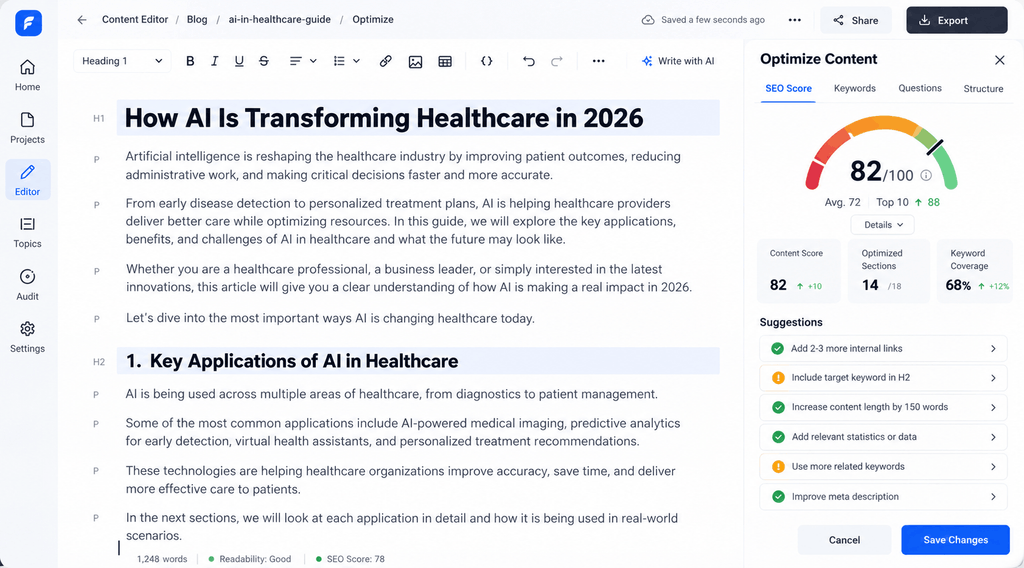
Images and videos can provide additional value when they explain processes, demonstrate products, or illustrate complex subjects.
Use descriptive filenames, meaningful alt text, and optimized image sizes.
A technical diagram explaining a workflow may be more useful than an unrelated futuristic AI illustration.
8. Maintain Accurate Business and Product Information
AI search can support research into local businesses, professional services, and products.
For companies operating in these categories, consistent business information remains essential.
Businesses should maintain accurate service descriptions, contact details, locations, operating information, and product availability where applicable.
Google recommends using relevant platforms such as Google Business Profile and Merchant Center to help keep business and product information discoverable.
For Google AI Mode SEO, a service provider should also clearly describe what it offers, where it operates, and which customer problems it solves.
Avoid claiming locations, certifications, or capabilities the company cannot verify.
For ecommerce stores, clear product specifications, pricing, availability, and purchasing information can help customers evaluate suitable options.
9. Keep Content Updated Without Making Unnecessary Changes
AI-powered search experiences can involve information that changes over time.
Outdated service descriptions, obsolete software instructions, and inaccurate product details can weaken a page’s usefulness.
A sustainable Google AI Mode SEO strategy includes reviewing important pages for factual accuracy and practical relevance.
Prioritize content affected by software changes, regulations, platform updates, or evolving customer requirements.
When making updates, correct outdated statements and add genuinely useful information.
Do not change publication dates merely to create an impression of freshness.
Likewise, avoid rewriting articles every few weeks without a meaningful reason.
The objective is to maintain dependable resources, not manufacture publishing activity.
How to Measure Google AI Mode SEO Performance
One of the biggest challenges with AI search optimization has been understanding whether a website actually appears in AI-generated responses.
Google’s 2026 Search Console developments provide a more useful starting point.
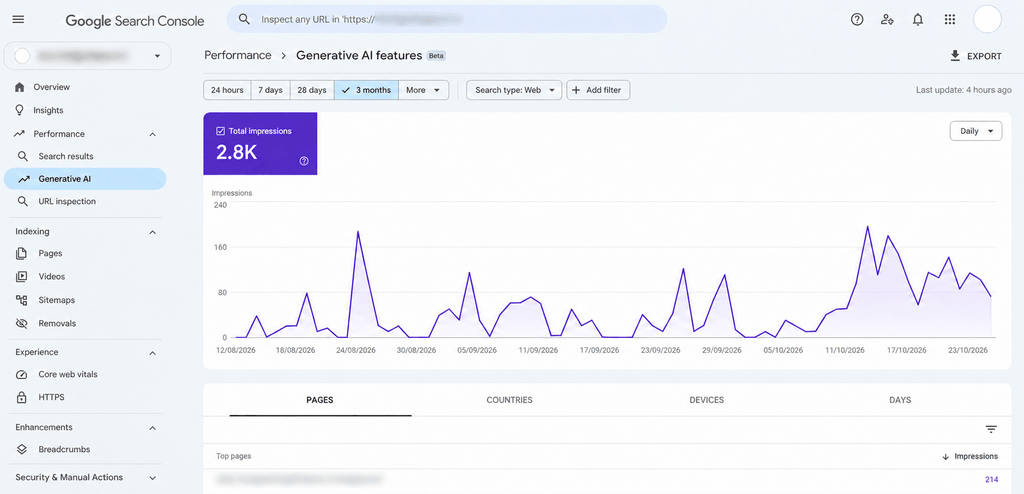
Step 1: Open the Generative AI Performance Report
Sign in to Google Search Console and select your verified website property.
Open the dedicated Generative AI performance report for Search.
Google’s official reporting documentation explains that the report includes impressions from AI Overviews and AI Mode.
If the report does not appear, your website may not have accumulated sufficient eligible impressions.
The report does not provide complete, separate attribution for every AI response or individual user question.
Step 2: Examine Pages and Visibility Trends
Review the pages receiving AI search impressions and compare reporting periods.
Look for meaningful patterns.
Are informational articles gaining visibility? Are service pages receiving exposure? Which pages consistently contribute to the overall impression total?
Compare those observations against changes in your website’s content and indexing.
Do not assume that an impression increase was caused by a particular optimization without sufficient evidence.
Step 3: Connect Visibility With Business Outcomes
Google AI Mode SEO should ultimately support meaningful business results.
Use Google Analytics and your CRM to monitor organic landing-page visits, qualified inquiries, consultation requests, and completed purchases.
Compare changes in organic traffic and conversion activity alongside AI visibility trends.
However, avoid treating all Google organic conversions as conversions directly generated by AI Mode.
The dedicated generative AI report measures impressions, and it does not provide a complete conversion attribution system.
This distinction helps businesses make decisions based on reliable information rather than inflated performance claims.
Common Google AI Mode SEO Mistakes to Avoid
AI search has created considerable interest in new optimization techniques, but not every popular recommendation is supported by Google’s documentation.
One mistake is assuming that adding an llms.txt file automatically improves AI Mode visibility. Google has clarified that its Search systems do not use this file for ranking or inclusion in generative AI features.
Another misconception is that articles must be divided into extremely small text sections for AI systems to understand them.
Google does not require this practice.
Businesses should also avoid purchasing artificial mentions, publishing near-duplicate pages for numerous search variations, or adding irrelevant structured data.
A separate concern is confusing Google’s AI-related controls.
Search Console now offers a Search generative AI inclusion control under Settings > Search generative AI. Websites seeking visibility should verify they have not excluded themselves.
The Google-Extended robots.txt token serves a different purpose involving certain AI training and grounding uses. It is not an AI Mode ranking optimization technique.
Ultimately, Google AI Mode SEO should strengthen the usefulness and accessibility of a website rather than introduce unnecessary technical complexity.
A Practical 90-Day Google AI Mode SEO Action Plan
Businesses do not need to rebuild their entire website to begin improving their AI search readiness.
A structured approach makes the work more manageable.
Days 1 to 30: Audit Technical Foundations
Review important pages in Search Console, identify indexing problems, and verify the Search generative AI inclusion setting.
Examine page experience, internal links, canonical URLs, and critical technical issues.
Establish baseline data for organic traffic, leads, and AI search impressions where available.
Days 31 to 60: Improve High-Value Content
Identify pages that support important business services and customer questions.
Strengthen those resources with useful explanations, accurate comparisons, original insights, and trustworthy references.
Update outdated material and connect relevant pages through internal links.
Prioritize quality over publishing volume.
Days 61 to 90: Measure and Refine
Review changes in Search Console and your analytics platform.
Identify content attracting meaningful visibility and determine where visitors still encounter unanswered questions.
Improve navigation, calls to action, and content clarity.
Continue evaluating results without expecting immediate or guaranteed inclusion in AI answers.
Google AI Mode SEO works best as a continuous improvement process integrated with your broader digital marketing strategy.
Final Thoughts
Google AI Mode is changing the way businesses compete for attention in search, but it has not eliminated the value of traditional SEO.
Successful Google AI Mode SEO depends on creating useful content, maintaining a technically accessible website, demonstrating credible expertise, and understanding how visitors discover your business.
Google’s 2026 updates also give website owners better opportunities to understand AI search visibility and connect their content with people researching complex questions.
For businesses seeking to strengthen their online presence, the priority should be building an effective search and conversion strategy rather than chasing temporary optimization trends.
At Versgen, we help businesses improve technical SEO, develop conversion-focused websites, and build connected digital growth systems.
Explore our digital solutions and growth services to discover how your website can better support visibility, engagement, and customer acquisition.
Frequently Asked Questions
1. What is Google AI Mode SEO?
Google AI Mode SEO involves improving a website’s content, technical accessibility, and relevance to increase its opportunities for visibility in Google’s AI-powered search experiences. It builds on established SEO practices rather than replacing them with a separate ranking system.
2. How can I get my website featured in Google AI Mode?
Make sure your pages are indexed, eligible to appear in Search with snippets, and not excluded from generative AI features. Publish helpful, original information and maintain a strong technical foundation. Google determines which sources to display, so inclusion cannot be guaranteed.
3. Is traditional SEO still important for Google AI Mode?
Yes. Google confirms that its generative AI search features rely on core Search ranking and quality systems. Technical SEO, helpful content, internal links, and reliable website information remain important components of an effective Google AI Mode SEO strategy.
4. Do I need special schema markup for AI search?
No. Google does not require special structured data for AI Mode or AI Overviews. Relevant existing markup can still help search engines understand your content and support eligible search features, but it does not guarantee AI citations or additional visibility.
5. How can I track my website’s visibility in Google AI Mode?
Use the Generative AI performance report in Google Search Console. It provides impression data from AI Mode and AI Overviews, including useful page, location, and device breakdowns. Combine this information with website analytics to evaluate broader organic traffic and business outcomes.
6. Does Google AI Mode SEO require an llms.txt file?
No. Google’s official guidance states that llms.txt is not required for Google Search, including its generative AI capabilities. Maintaining such a file for other compatible systems is a separate decision, but it does not improve Google Search visibility by itself.
7. How long does Google AI Mode SEO take to show results?
There is no guaranteed timeline. Results depend on indexing, content quality, competition, website condition, and Google’s selection of supporting sources. Businesses should monitor visibility over time, address important technical issues, and make improvements based on measurable performance rather than expecting immediate AI citations.