


Table of Contents
Table of Contents
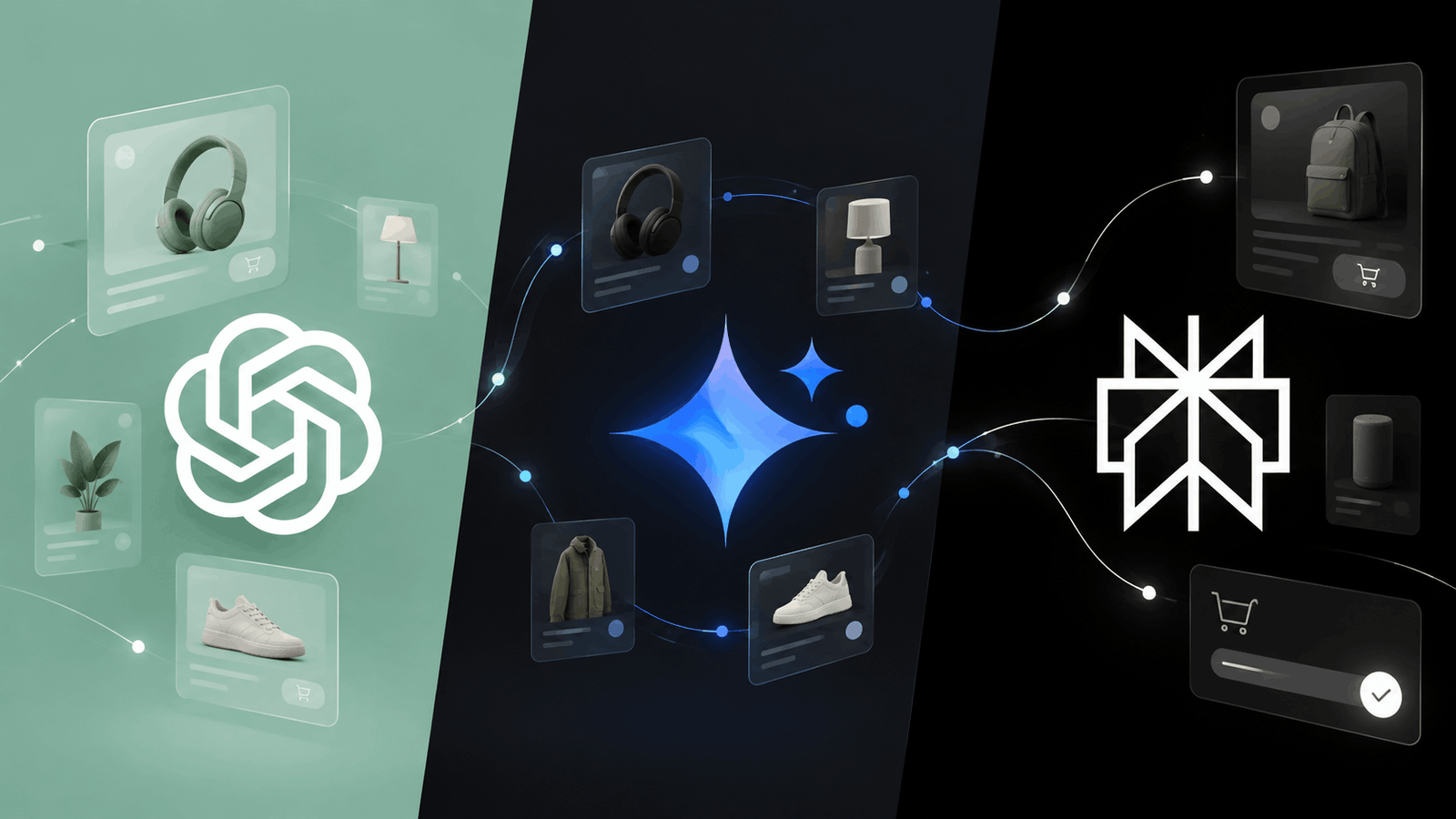
On October 28, 2026, the Shopify Fall 2026 Update introduced one of its most significant ecommerce announcements of the year, bringing new ways for businesses to sell, manage operations, and reach customers through AI-powered shopping experiences.
The Shopify Fall 2026 Update, officially named Fall ’26 Edition: Exponential, brings together improvements to artificial intelligence, storefront design, payment processing, marketing automation, retail operations, and developer tools.
For merchants, the changes go beyond new dashboard features. Shopify is creating more opportunities for products to be discovered and purchased outside traditional online stores, including through AI assistants and connected shopping applications.
But which features matter most to your business, and what should you actually do with them?
This guide explains the October 28 Shopify Fall 2026 Update, its most important features, their practical applications, and how store owners and developers can prepare.
Quick Overview:
The Shopify Fall 2026 Update was announced on October 28, 2026, under the name Exponential. It introduces a more connected commerce ecosystem where merchants can manage stores with AI, customers can shop through personal AI agents, and developers can build shopping experiences using Shopify’s commerce infrastructure.
The most important announcements include:
- Shop.md: A shopping skill that helps AI agents discover products and assist with purchases.
- Shop.dev and WebMCP: Developer tools that connect shopping agents with product catalogs, carts, and checkout.
- Expanded Shop Pay: Checkout capabilities inside supported personal AI agents.
- Sidekick and Canvas: More advanced AI assistance and visual storefront editing.
- Shopify Protect: Expanded fraud prevention and dispute management.
- Marketing improvements: Campaign Autopilot, WhatsApp automation, and improved reporting.
- Operational upgrades: Better analytics, Shopify Flow automation, POS tools, and inventory management.
These developments were presented in Shopify’s official Fall ’26 Edition announcement.
Not every feature has the same availability. Some are already accessible, while others are in early access or scheduled for a gradual rollout.
What Makes Shopify’s October 28 Update Different?
Traditional ecommerce platforms concentrate on helping merchants build websites, list products, and process orders.
The Shopify Fall 2026 Update expands that approach by connecting commerce with applications and AI systems customers already use.
Instead of requiring every customer to visit an online store, Shopify is making it possible for participating shopping experiences to discover products and support purchases through its commerce infrastructure.
Three major changes explain this direction.
First, Shopify Catalog makes product information available to supported shopping experiences.
Second, Shop Pay extends familiar checkout functionality into additional purchasing environments.
Third, tools such as WebMCP enable compatible AI agents to interact with storefronts through structured operations rather than relying entirely on visual page navigation.
Shopify says its network includes more than one billion products available for discovery across AI channels and more than 400 million shoppers with Shop Pay accounts.
These figures describe Shopify’s network scale, not guaranteed exposure or sales for individual merchants.
1. Shop.md: Turning AI Assistants Into Personal Shoppers
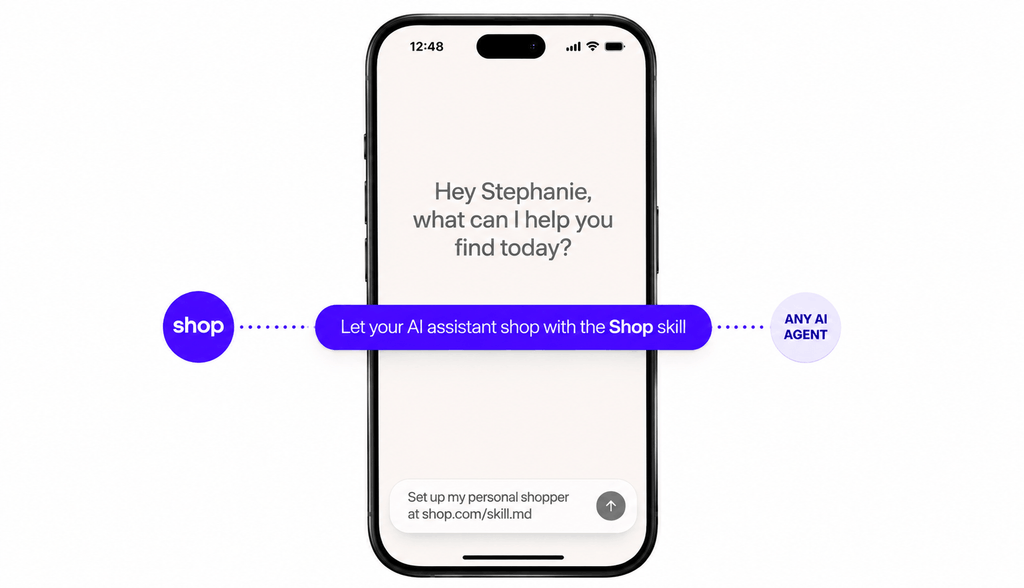
One of the biggest announcements in the Shopify Fall 2026 Update is Shop.md, a shopping skill that allows compatible AI assistants to help customers find and purchase products.
Rather than searching multiple websites manually, shoppers can provide an AI agent with the shopping skill and describe what they want.
For example, a customer might ask:
Find comfortable running shoes under $150, compare the available options, and help me purchase the best match.
With the appropriate access and integrations, the agent can search Shopify’s product catalog, provide recommendations, assist with checkout through Shop Pay, and help track orders.
How Shop.md Works
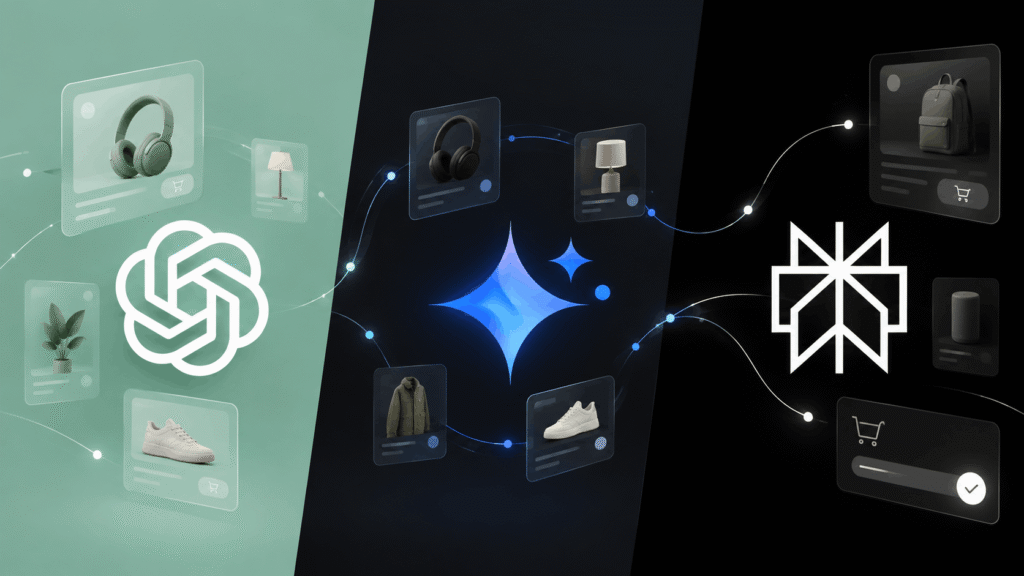
Shop.md connects shopping capabilities with personal AI agents such as ChatGPT and Claude.
The shopping experience can use customer preferences and available Shop account information to deliver more relevant recommendations, subject to applicable permissions.
It is also customizable, allowing users to adapt the experience to their shopping preferences.
For merchants, the Shopify Fall 2026 Update creates an opportunity to reach customers whose shopping journeys begin in AI conversations rather than search engines.
However, Shop.md does not guarantee that every product will appear in recommendations.
What merchants should do: Maintain complete product titles, descriptions, availability, pricing, images, and product attributes so shopping systems can better understand what they sell.
2. Shop.dev: A New Foundation for AI Shopping Applications
While Shop.md focuses on shoppers, Shop.dev, introduced in the Shopify Fall 2026 Update, gives developers infrastructure for building connected commerce applications.
The Shopify Fall 2026 Update introduces a unified connection through Shop.dev for accessing Shopify Catalog, Shop sign-in, carts, checkout, and Shop Pay.
Developers can use these capabilities to build personalized shopping assistants, product discovery applications, and other ecommerce experiences without recreating Shopify’s core purchasing infrastructure.
For example, a business could develop a gift recommendation assistant that helps customers explore products from multiple merchants.
According to Shopify’s developer announcement, developers can begin using the Shop.dev shopping connection without an API key.
This reduces initial integration friction, although production applications still need appropriate security, testing, and customer permission handling.
3. WebMCP: Making Shopify Storefronts Accessible to AI Agents
WebMCP is another major developer-focused capability highlighted in the Shopify Fall 2026 Update.
Traditional browser automation often requires an AI agent to inspect a webpage, identify buttons, and imitate human clicks.
WebMCP provides a more structured method.
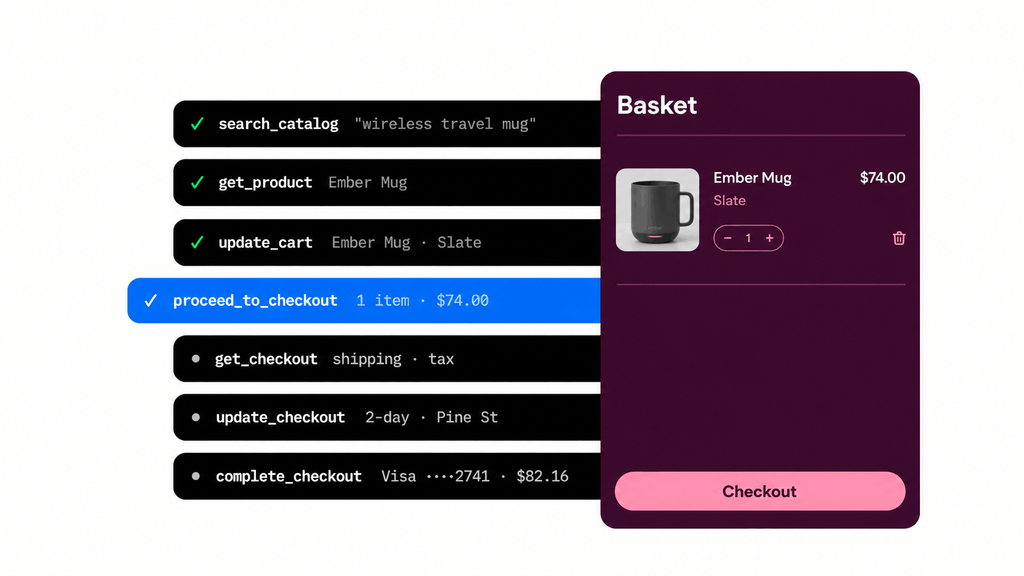
A compatible browser agent can use registered storefront tools to perform supported shopping actions, including product searches, cart updates, and checkout navigation.
How WebMCP Changes the Shopping Process
Consider a customer looking for a particular product.
Without structured tools, an agent may need to locate the search field, enter a query, interpret the results, and interact with several different page elements.
With WebMCP, the agent can request structured information and use supported actions directly.
This approach can make automated shopping interactions more reliable.
Shopify provides WebMCP tools for Liquid storefronts and supported Hydrogen implementations, along with tools for checkout.
Importantly, checkout completion still requires buyer approval, and existing checkout validations remain in place.
Shopify’s WebMCP developer documentation confirms that the tools are available, although compatible browser-agent support remains limited, particularly to Chromium-based environments.
For the Shopify Fall 2026 Update, WebMCP represents progress toward agent-ready storefronts, not universal support across every browser and AI application.
What merchants should do: Test storefront compatibility, maintain accurate product information, and avoid assuming every AI assistant can already use these capabilities.
4. Shop Pay Expands Into Personal AI Agents
The Shopify Fall 2026 Update is also changing where checkout can happen.
The Shopify Fall 2026 Update extends Shop Pay into supported personal AI agents, including Meta’s Muse, Claude Duet, and Instinct.
Additional announced integrations include Shop Pay capabilities for purchases from brands outside Shopify through supported experiences such as Claude Duet, Grok Bot, and Instinct.
The important distinction is that product discovery and payment authorization are separate steps.
Customers remain responsible for approving purchases, and Shopify says their payment card details are not shared directly with the shopping agent.
Why This Matters for Ecommerce Businesses
Checkout friction is a common challenge for online retailers.
Customers may discover products but abandon purchases when payment requires too many steps or an unfamiliar interface.
Shop Pay’s expansion aims to bring recognizable checkout functionality into more shopping environments.
A customer could discover a product through a supported personal assistant and continue toward checkout without beginning the entire shopping journey again.
The Shopify Fall 2026 Update therefore makes checkout integration an increasingly important part of commerce strategy, although actual availability depends on the agent, merchant eligibility, and supported payment methods.
5. Universal Checkout and the New Shop.com Experience
The Shopify Fall 2026 Update introduced two related shopping improvements through the October 28 announcement.
Universal Checkout Across Multiple Merchants
Universal Checkout allows shoppers to purchase products from different brands through a single checkout experience in the Shop app.
Previously, purchasing from multiple merchants often meant completing separate checkouts.
With this new experience, buyers can build multi-brand carts while Shopify preserves the relevant merchant rules, checkout validations, and order handling.
For developers, Shopify also announced Universal Checkout capabilities for building cross-merchant shopping applications.
Shop.com Expands Shopping to the Web
The Shopify Fall 2026 Update also introduces a richer shopping experience at Shop.com.
The website brings together personalized product discovery, curated shopping content, shoppable posts, and order tracking.
For merchants, this creates another potential discovery surface beyond their individual storefronts.
The practical priority is maintaining accurate product information and a consistent brand presentation across connected channels.
6. Shopify Catalog Eligibility and Knowledge Base
Being discoverable through AI-powered shopping depends on more than simply having an online store.
The Shopify Fall 2026 Update introduces improved visibility into Shopify Catalog eligibility and gives merchants more control over the business information available to AI shopping agents.
Inside Shopify’s admin, merchants can check whether their stores meet Catalog requirements and review issues that may affect eligibility.
A new Knowledge base area under Sales channels > Agentic allows businesses to manage information such as shipping policies, return windows, and frequently asked questions.
Shopify can suggest information based on existing storefront content, but merchants must approve the facts before publication to connected agents.
This matters because a shopping assistant needs trustworthy answers about more than prices.
It may also need to explain delivery locations, return eligibility, or available services.
For ecommerce SEO and AI discovery, the Shopify Fall 2026 Update reinforces the value of accurate product data, clear policies, and consistent business information.
7. Sidekick Gets More Powerful Business Capabilities
Shopify Sidekick is becoming more than a conversational assistant.
With the Shopify Fall 2026 Update, Sidekick can handle increasingly complex administrative tasks, perform calculations, write code, research information online, and retain merchant-provided context.
It can also prepare multiple related changes for review.
For example, a merchant planning a holiday promotion could ask Sidekick to help prepare product descriptions, review pricing opportunities, and organize relevant store changes.
Sidekick can also use supported installed app data when generating recommendations.
Sidekick and SimGym
The Shopify Fall 2026 Update introduced another useful capability involving SimGym, its AI-powered shopping simulation environment.
Sidekick can prepare proposed storefront changes, test them using simulated shoppers, and present recommendations for merchant review.
This may help businesses evaluate design ideas before making changes publicly.
However, simulated shopper results should not be treated as proof that real customers will behave identically.
Merchants should still measure actual conversion rates, revenue, and customer behavior after implementing changes.
The Shopify Fall 2026 Update makes AI-assisted optimization more accessible while preserving the importance of human review.
8. Canvas Introduces a New Way to Design Shopify Stores
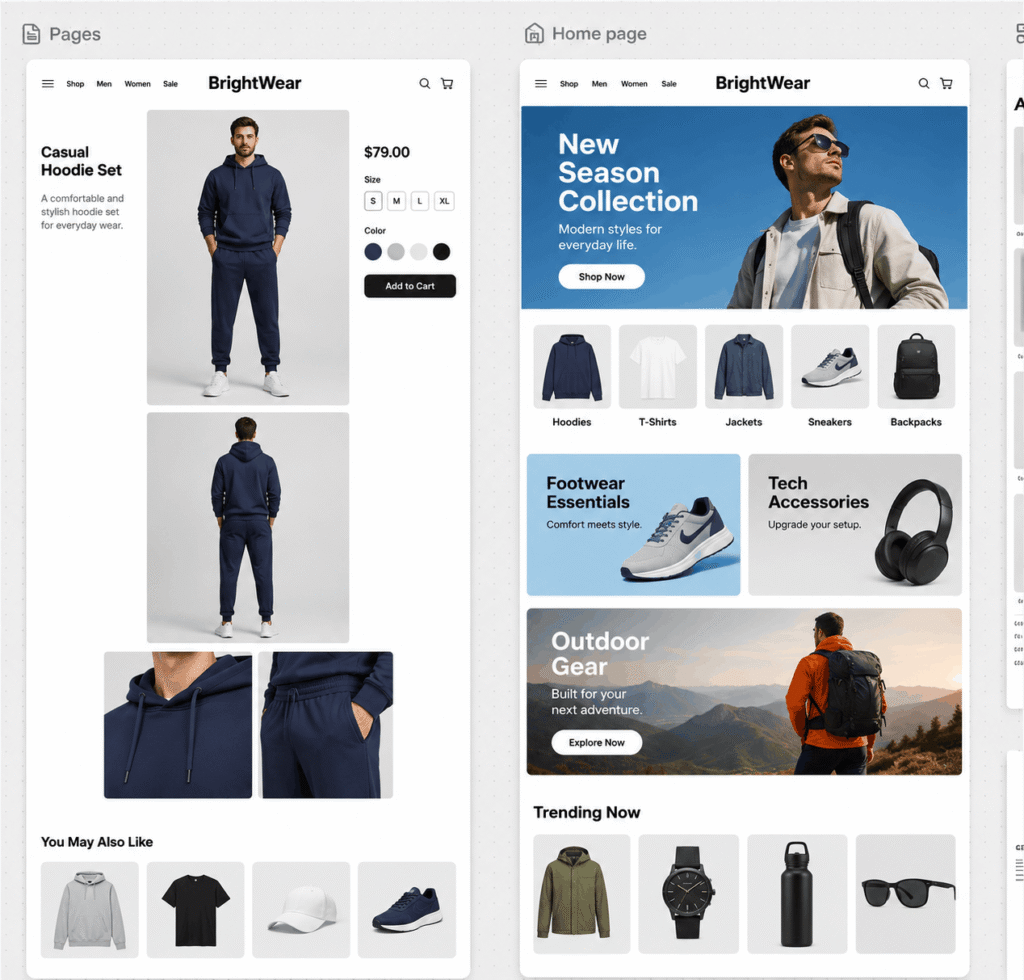
Canvas is one of the most visually significant features presented in the Shopify Fall 2026 Update.
Instead of editing individual sections through disconnected configuration screens, Canvas allows merchants to view and work on their storefront designs in a unified visual environment.
Businesses can collaborate with Sidekick to make design adjustments, explore layouts, and prepare more extensive storefront changes.
The Shopify Fall 2026 Update positions Canvas as a way to reduce the technical effort required for certain design tasks.
For example, a merchant could explore a homepage redesign while reviewing how the new layout fits with other store pages.
Canvas remains in early access, and compatibility depends on the supported theme architecture and available capabilities.
Store owners should confirm eligibility before planning a full redesign around it.
9. Better Product Management and Storefront Merchandising
Beyond AI shopping, the Shopify Fall 2026 Update includes practical improvements to managing product catalogs.
Merchants can customize how product data is mapped to different sales channels, helping maintain channel-specific information without manually recreating every product record.
Multi-source collections provide more flexibility for grouping products, while improved product management brings variant editing closer to the main product page.
The Shopify Fall 2026 Update also highlighted support for additional barcodes per variant and improvements to selling digital products.
These changes can be particularly useful for retailers managing large product catalogs, multiple sales channels, or complicated inventory structures.
The business value is straightforward: fewer repetitive catalog tasks, better product organization, and more consistent information across customer touchpoints.
10. Shopify Protect Strengthens Fraud and Dispute Management
Fraud prevention is another important area of the Shopify Fall 2026 Update.
Shopify Protect brings together tools intended to identify risky transactions, support chargeback disputes, and help merchants manage payment risk.
The announced capabilities include custom fraud rules, rule testing against historical orders, and more automated dispute handling.
The Shopify Fall 2026 Update also highlighted AI-generated dispute responses that account for individual chargeback circumstances.
According to its announcement, Shopify Payments prevents more than 12,000 high-risk payments every minute across its network.
That is a platform-wide figure, not an individual store performance guarantee.
Some expanded Shopify Protect capabilities were marked as rolling out soon.
Businesses should review their available fraud tools, monitor false positives, and avoid creating overly restrictive rules that accidentally block legitimate customers.
11. New Payment Methods and Checkout Improvements
The Shopify Fall 2026 Update expands support for local payment methods within Shopify Payments.
The seven highlighted methods are Alipay, WeChat Pay, MB WAY, OXXO, Satispay, Scalapay, and GrabPay.
Availability differs by region, payment environment, and merchant eligibility.
These additions can help international businesses offer customers more familiar payment choices.
The Shopify Fall 2026 Update also announced improvements involving Shopify Tax, international pricing, checkout presentation, and payment authorization.
Some checkout interface updates, including new payment selection layouts and simplified forms, were specifically marked for future rollout.
For merchants selling internationally, the most useful action is to review payment availability and checkout localization market by market.
A payment method that works well in one country may not be relevant or supported in another.
12. Campaign Autopilot and Smarter Marketing Automation
Marketing receives substantial attention in the October 28 announcement.
Through Campaign Autopilot, Shopify is expanding AI-supported advertising management to additional channels, including Microsoft Advertising and Snapchat, with X Ads listed as coming soon.
The platform also connects marketing activity with SEO recommendations.
This could help businesses coordinate certain advertising and optimization activities from a more centralized environment.
WhatsApp Marketing Automation
The Shopify Fall 2026 Update adds automated WhatsApp messaging capabilities through Shopify Messaging.
Businesses can create supported automations for abandoned browsing sessions, abandoned carts, and incomplete checkouts.
For example, a merchant could send an appropriate recovery message to an eligible customer who previously provided the necessary marketing consent.
This creates opportunities to reconnect with customers through a channel they already use.
However, merchants must follow applicable messaging, consent, and privacy requirements.
Improved Marketing Reporting
Shopify also highlighted more unified marketing reports and expanded Shop Campaigns availability across additional international markets.
Businesses should use these improvements to compare customer acquisition costs, sales attribution, and return on advertising spend rather than focusing only on clicks.
The Shopify Fall 2026 Update creates additional marketing options, but campaign profitability still depends on targeting, offers, creative quality, and measurement.
13. Shopify Flow, Analytics, and Operational Automation
Operational improvements are among the most practical changes for established merchants.
The Shopify Fall 2026 Update introduces a product-updated trigger in Shopify Flow, allowing automations to respond when supported product or variant fields change.
This can reduce repetitive administrative work.
For example, a business could create an automation that responds when a product price, tag, or metafield changes.
The Shopify Fall 2026 Update also introduced more granular permission checks for managing Flow automations and additional workflow versioning capabilities.
Improved Shopify Analytics
Analytics improvements include interactive geographic sales maps, app activity reporting, custom annotations, and additional reporting dimensions.
Merchants can use geographic information to identify regions with stronger demand.
App events can also help connect supported marketing or loyalty activity with broader store performance.
These capabilities make it easier to investigate business trends without relying on disconnected reports.
14. POS, Inventory, and Fulfillment Improvements
Physical retailers also benefit from the Shopify Fall 2026 Update.
Shopify POS expands its ability to recognize returning customers through Shopify’s payment network when customers choose to share their details.
Additional improvements include saved carts across POS devices, scheduled inventory counts, enhanced device management, and operational reporting.
For businesses operating both online and physical locations, these changes support a more connected customer and inventory experience.
The Shopify Fall 2026 Update also expanded selected shipping capabilities, market-specific shipping management, and fulfillment tools.
Shop Promise remains relevant for eligible US merchants, with delivery and return information presented to help shoppers make purchasing decisions.
The key opportunity is improving consistency between online orders, in-store purchases, inventory records, and customer service.
15. New Tools for Shopify Developers
The Shopify Fall 2026 Update also includes substantial changes for developers building applications and custom storefronts.
Alongside Shop.dev and WebMCP, Shopify announced improvements to its development infrastructure.
These include a refreshed Dev Dashboard, app event reporting, expanded Catalog API filters, and additional tools for application security.
A new theme architecture puts more emphasis on Liquid-based structure, typed contracts, and development workflows that AI coding agents can understand more easily.
Shopify also highlighted a rebuilt Hydrogen approach that supports additional frameworks and runtimes.
The developer edition includes security checks through Shopify’s AI Toolkit, designed to identify common application vulnerabilities.
These updates provide more flexibility for developers, but adopting new architecture or tooling still requires compatibility testing and careful implementation.
How to Prepare Your Store for the Shopify Fall 2026 Update
Not every business needs to adopt every feature immediately.
A practical approach is to prioritize improvements based on the problems currently affecting your store.
Step 1: Review Shopify Catalog Eligibility
Check whether your store qualifies for Shopify Catalog participation.
Review product availability, pricing accuracy, business details, and any eligibility issues highlighted in the admin.
Step 2: Improve Your Product Information
Make product descriptions specific, informative, and easy to understand.
Include relevant attributes such as sizes, materials, compatibility, and product benefits.
Accurate information supports traditional shopping experiences and may help connected AI systems interpret products.
Step 3: Review Your Knowledge Base
Inspect the business facts being prepared for shopping agents.
Confirm that shipping, returns, and other customer-facing information is correct before approving publication.
Step 4: Evaluate Sidekick and Automation Opportunities
Identify repetitive tasks that consume staff time.
Test supported Sidekick and Shopify Flow capabilities in controlled workflows before expanding their use.
Step 5: Review Checkout and Marketing Performance
Check which new payment methods, recovery automations, and campaign tools are available for your business.
Track relevant performance indicators, including conversion rate, acquisition cost, and recovered revenue.
Step 6: Test Before Publishing Major Changes
The Shopify Fall 2026 Update introduces powerful tools, but availability and compatibility vary.
Use previews, staging environments, merchant approvals, and real performance monitoring when introducing changes.
For custom development, involve qualified developers when modifications affect checkout behavior, integrations, or critical store operations.
Important Limitations Merchants Should Understand
The Shopify Fall 2026 Update is a major platform announcement, but several limitations deserve attention.
Canvas is in early access, some Shopify Protect improvements are still rolling out, and certain checkout features were announced as coming soon.
WebMCP availability also does not mean every existing shopping agent can interact with Shopify storefronts.
Payment support, marketing features, and retail capabilities may depend on geographic location, store configuration, eligibility, or subscription plan.
Merchants should also distinguish between announced functionality and measurable business impact.
No feature automatically guarantees increased sales, stronger search visibility, or improved profitability.
Shopify’s official documentation remains the best reference for confirming current availability before implementation.
Final Thoughts
The October 28, 2026, Shopify Fall 2026 Update represents a significant development in how ecommerce businesses can connect with shoppers and manage operations.
Shop.md, Shop.dev, WebMCP, and expanded Shop Pay capabilities point toward a future where customers can discover and purchase products through more connected shopping experiences.
At the same time, Sidekick, Canvas, Shopify Flow, payment improvements, and marketing automation provide merchants with practical opportunities to improve everyday operations.
The most effective strategy is not adopting every new capability immediately. It is identifying which improvements solve genuine business problems.
Whether you’re planning to launch a new Shopify store, redesign an existing one, or integrate advanced automation and ecommerce features, working with an experienced Shopify development agency can make the process more efficient and effective.
From custom Shopify development and store optimization to SEO, digital marketing, and workflow automation, the right expertise can help turn these new opportunities into practical business improvements. If you’re exploring any of these services, consider consulting a trusted digital solutions agency to discuss your goals and find the right approach for your business.
Frequently Asked Questions
1. What is the Shopify fall update 2026?
The Shopify Fall 2026 Update is Shopify’s Fall ’26 Edition, called Exponential, announced on October 28, 2026. It includes AI shopping capabilities, developer tools, Sidekick improvements, checkout enhancements, marketing automation, and operational upgrades.
2. What is Shop.md in Shopify’s October 28 update?
Shop.md is a shopping skill that lets compatible AI agents help users discover products, receive recommendations, and complete supported purchases through Shop Pay. It connects shopping capabilities with AI assistants such as ChatGPT and Claude.
3. What is Shopify WebMCP?
Shopify WebMCP provides structured tools that compatible browser agents can use to interact with storefronts and checkout. These tools support product discovery, cart operations, and buyer-approved checkout while respecting Shopify’s existing validations.
4. Is Shopify Canvas available to all merchants?
No. Canvas was presented in early access as part of the Shopify Fall 2026 Update. Merchants should verify whether their store and theme are supported before planning a redesign using Canvas.
5. Does Shopify’s new update improve SEO?
The October 28 announcement includes improvements that may support product discovery, store information management, and marketing workflows. However, these tools do not guarantee higher Google rankings. Strong technical SEO, useful content, accurate product data, and a good shopping experience remain essential.
6. Can customers use Shop Pay inside AI assistants?
Yes, Shopify announced Shop Pay checkout support in selected personal AI agents. Availability varies by provider and shopping experience. Customers remain responsible for approving their purchases.
7. Do merchants need developers to use the new Shopify features?
Not necessarily. Many Shopify Fall 2026 Update features are designed for merchants to manage through the Shopify admin. However, custom agent integrations, advanced storefront development, and complex automation workflows may require development expertise.