


Table of Contents
Running a business is a stressful process as there are many tasks that could be automated, but are not, such as customer service, lead follow-ups, emails, reports, meetings, content production, and more.
And this is why AI automation for small business is such a wonderful idea for you, but it is best to start with the small stuff so you do not get ahead of yourself and become overwhelmed with the process of determining what is best for your company.
Start small, then build on success.
AI Automation for Small Business: What You Should Automate First
When thinking about a process to begin with, it is best to think about something that:
- Is frequent
- Is somewhat predictable
- Has limited value
- Is digital
- Is something you can measure instead of something that requires a significant level of judgement
The best processes to begin with are normally things that are not of great value but do take a decent amount of time.
Processes that you should consider automating include:
1. Customer Enquiries
If you have had a lot of repeat questions from your customers on your website, an AI system could be utilised to answer them first, saving you time and preventing a customer from walking away because they could not get an answer from you.
Additionally, you could utilise an AI chatbot to answer simple questions, ask clarifying ones, and even pass more complex ones to the team.
This is a great way to have something automated when customers are not around, as they may not be able to contact you when you are available to answer their questions.
An AI response could help you get a lead even outside working hours.
Customer enquiry → AI response → Lead captured → CRM updated → Team notified
This is one of the simplest ways to introduce AI automation for small business without changing how your team handles more complex customer interactions.
2. Lead Follow-Up
Following up is something that everyone talks about, but few do, and leads are slipping away because the opportunity is not being followed up on and escalated when the time comes for action.
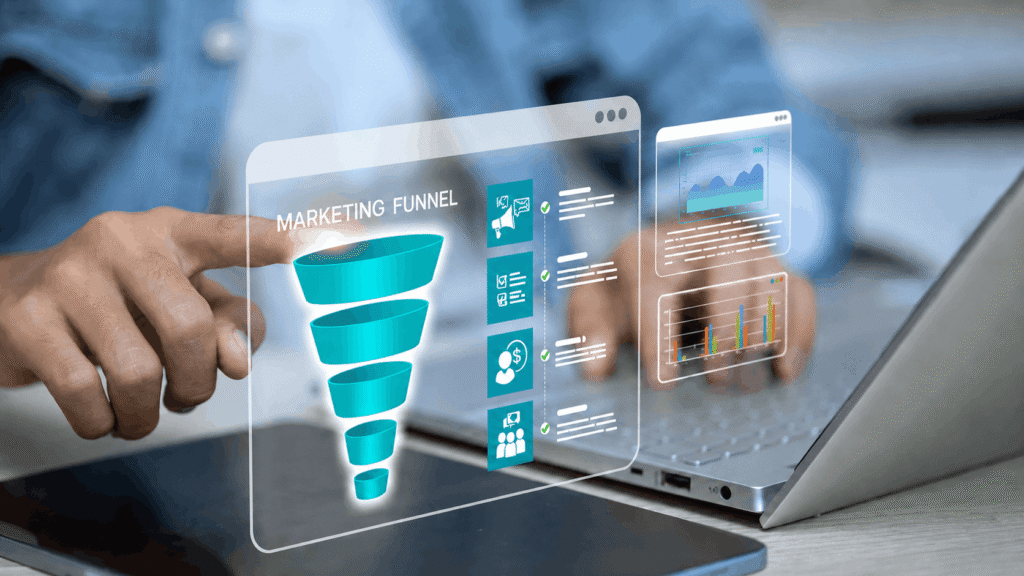
An AI system could be utilised to respond to a lead depending on where they are in the funnel and even follow them up if they have not responded until a certain point or until they have been escalated to the team.
New lead → First response → Follow-up after 48h → Second follow-up → Sales notified
The lead follow-up is a great process to begin with as you can see what percentage of leads responded to your messages and brought you sales.
Additionally, it takes away the mental burden of having to remember everyone that you need to follow up with, and once it is set up, the team only has to deal with the leads that have shown some level of interest in engaging with you.
For many companies, AI automation for small business can make lead management more consistent without requiring additional staff.
3. Email
If you feel like you are spending too much time on your email, it is best to automate the mundane tasks such as sorting, flagging, summarising, replying to, or even drafting emails.
It is best to start by letting the system draft replies for you as it is a great way to get familiar with AI automation for small business.
This way, you can see how well it understands your emails, edit them, and eventually automate the whole process.
These small improvements can make AI automation for small business much easier to introduce into your everyday operations.
4. Meeting Notes and Reports
Notes at meetings can also be automated, thus removing this tedious task from your plate.
An AI system could be utilised to type out everything that you say, summarise the meetings, and extract the notes from them.
It could also be utilised to help you report by compiling information from your CRM, marketing software, other web apps, or any other place you store the information that you need to report on.
You could save a considerable amount of time by not having to go through websites and apps looking for information, and instead have the system do it for you, making it much easier to produce reports every month or quarter instead of spending hours sifting through information.
This is another practical example of how AI automation for small business can reduce repetitive administrative work.
5. Content and Marketing
An AI system could be utilised to help you draft blog posts, social media content, email newsletters, product descriptions, video scripts, and more.
However, it is best to always double-check them before publishing or sending them out so that you do not send out something that contains errors or is not up to standard.
As the source material suggests, it is best to let the AI system compile the information while your human expertise edits it.
This is a great tactic that could be utilised in many fields as the system could help you get information or ideas on paper faster while you ensure that everything is up to standard.
Used correctly, AI automation for small business can help your team produce content faster while keeping human oversight in place.
How to Choose AI Automation for Small Business
When choosing what to automate, there are three basic questions you should ask:
Does It Happen Often?
It is much easier to automate something that happens every day instead of something that only occurs a couple of times per year.
Therefore, it is best to identify what it is that you and your team do several times per week instead of per month.
You would be surprised at how much time you waste doing things that only occur a couple of times per month.
These are exactly the types of repetitive tasks where AI automation for small business can provide the most practical value.
Does It Have a Predictable Pattern?
It is much easier for an AI system to do something with a predictable pattern as opposed to something that requires a certain level of judgement.
Therefore, it is best to try and automate the sorting of routine customer enquiries instead of trying to automate a high-level negotiation with one of your big clients.
Start with the predictable stuff and leave the nuanced tasks to your team.
Predictable workflows are usually a good starting point for AI automation for small business.
What Are the Consequences of Being Wrong?
The best thing to automate first is something safe and simple.
The lower the stakes, the better, as you are much less likely to make a mistake, and if the system does make one, there are limited consequences.
Therefore, it is best to automate something that is not mission-critical, such as the sorting of email, and leave the financial systems alone, as one error there could cause serious problems.
Begin with the simple, low-risk tasks, and work your way up.
This approach makes AI automation for small business safer to introduce because you can start with processes where mistakes have limited consequences.
Start With AI Automation for Small Business One Workflow at a Time
The number one mistake that companies make when it comes to AI business automation is trying to do too much at once.
Instead, it is best to:
1. Discover Bottlenecks
Begin by compiling a list of all the processes that waste a lot of your time.
Consider the things that you and your team do repeatedly throughout the week.
You would be surprised at how many tasks there are that could benefit from being automated.
These are normally things that are done so often that you rarely think about them.
Finding these bottlenecks is an important first step towards implementing AI automation for small business effectively.
2. Choose One Task
Now, it is time to choose the task that has the most potential while being the easiest to automate.
It does not have to be the most exciting thing to automate. It just has to be something practical that can be implemented and yield good results.
Choosing the right starting point can make AI automation for small business much easier to manage.
3. Test It
Test the system to see what works and what does not.
Make sure that it behaves the way that you want it to and that there is always an option for a human to step in and deal with anything that does not fit inside the parameters.
Testing the workflow first allows you to see whether your AI automation for small business setup is actually delivering the expected results.
4. Measure Success
Measure certain metrics to see if the process is something that is worth continuing, as well as where you can optimise it in the future.
The source material suggests that you measure these against your baseline to see how it affected your business.
In this case, you could measure saved hours worked, response time, number of leads followed up, booked appointments, and any other relevant metrics that would show you the value of the automated process.
Measuring the results helps you understand whether your AI automation for small business investment is saving time and improving efficiency.
5. Expand
Once you have proven that a certain task can be automated and optimised, it is best to expand on it, improve upon it, and move on to other redundant tasks.
This way, every time you implement something new, it is always building upon something else that you already know works instead of being an experiment with no real-world application.
What Should You Not Automate With AI?
There are certain things that should not be automated, such as negotiations, contentious customers, and finances.
You should also not automate employees or strategic planning, as they rely too much on human judgement and expertise.
An AI system is best utilised for repetitive tasks, but that does not mean that every part of your business should be automated just because it is possible.
Some tasks require more experience and insight than an AI system may have, and you should leave those be to give your team members breathing room and not remove every single element of human interaction from your business.
Knowing what not to automate is just as important as knowing where AI automation for small business can help.
Final Thoughts on AI Automation for Small Business
The question is not whether or not you can automate your entire business, because there is no point in asking that question.
The real question should be, “Which time-wasting task in my business can I automate?” Based on that, you can begin experimenting with different systems and eventually build on what works.
You could utilise AI automation for small business in a myriad of ways, from customer support to report generation and content production.
All you have to do is start with one task and eventually build on it.
After all, that is the point of implementing AI automation in business: to free you and your team to spend more time with your customers and your team, as well as focus on the things that actually matter in your business.
Ready to Automate Your Business With AI?
Let Versgen Technologies help you identify the processes to automate, build intelligent systems, and allow you to save time and grow your business. Contact us today to begin your journey in AI automation for small business.
Liked what you read? This is just a glimpse of how we think. Reach out and let’s talk about what we can build for your business.
Contact Us